Professor of Public Administration
Teaching and research in the Department of Political Science, Faculty of Social Sciences, Usmanu Danfodiyo University, Sokoto.
Teaching as a public duty
His teaching and research interests run from the machinery of public administration to the conduct of international relations — with a persistent concern for the relationship between governance, institutions and the building of a durable national community.
The classroom, in his practice, is not a retreat from public life but a continuation of it: the place where the next generation of administrators learns what standards are for.
Public Administration
The machinery of government: structure, personnel and the ethics of office.
Comparative Public Administration
How different states organise, staff and reform their public services.
Development Administration and Governance
The administrative conditions under which development succeeds or stalls.
International Relations
Nigeria’s place in a changing international order.
Nigeria in World Affairs
Foreign policy, diplomacy and the country’s continental obligations.
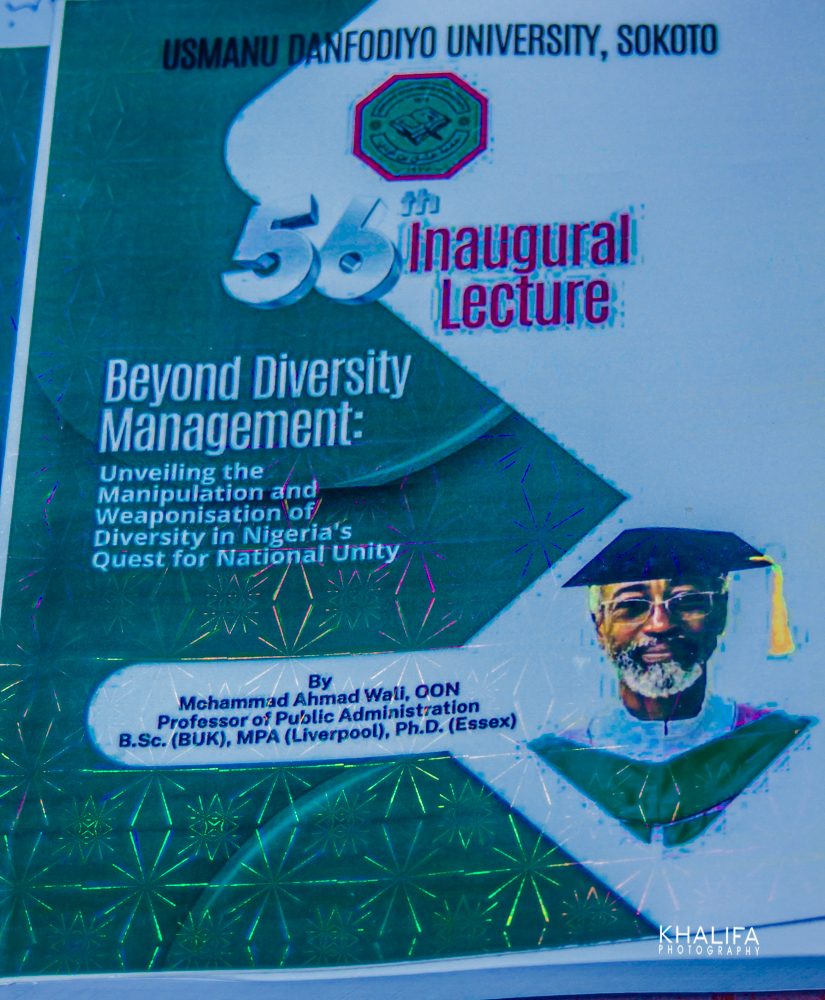
Beyond Diversity Management
Unveiling the Manipulation and Weaponisation of Differences in Nigeria’s Quest for National Unity
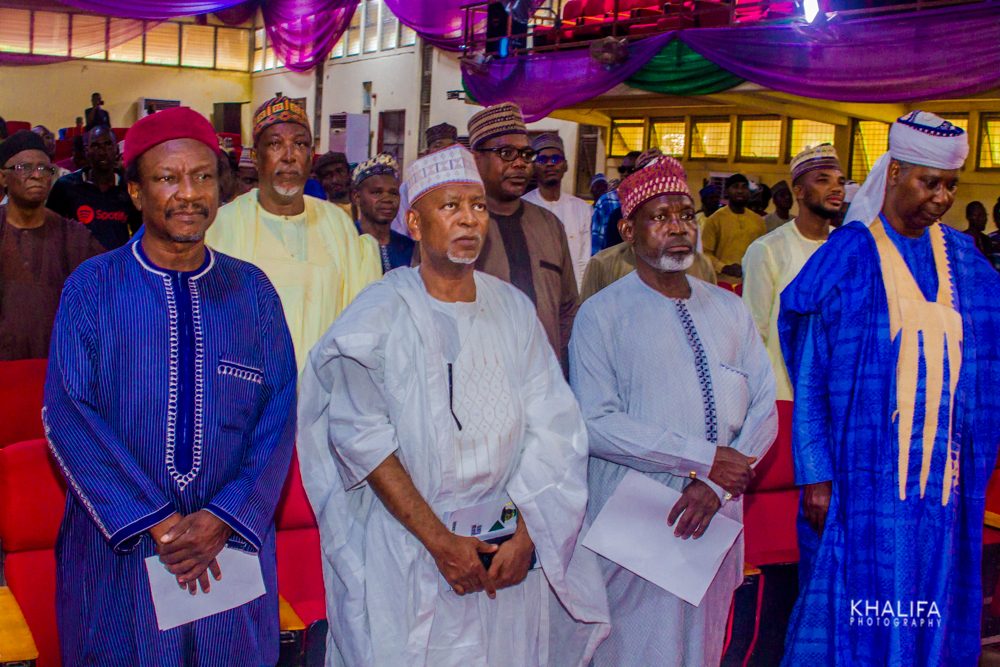
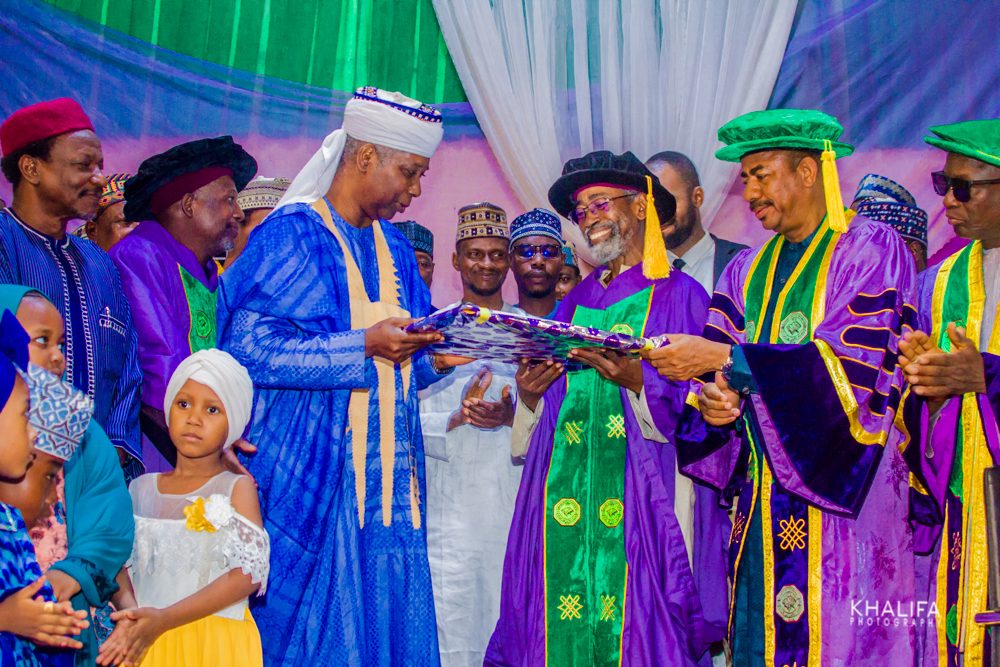
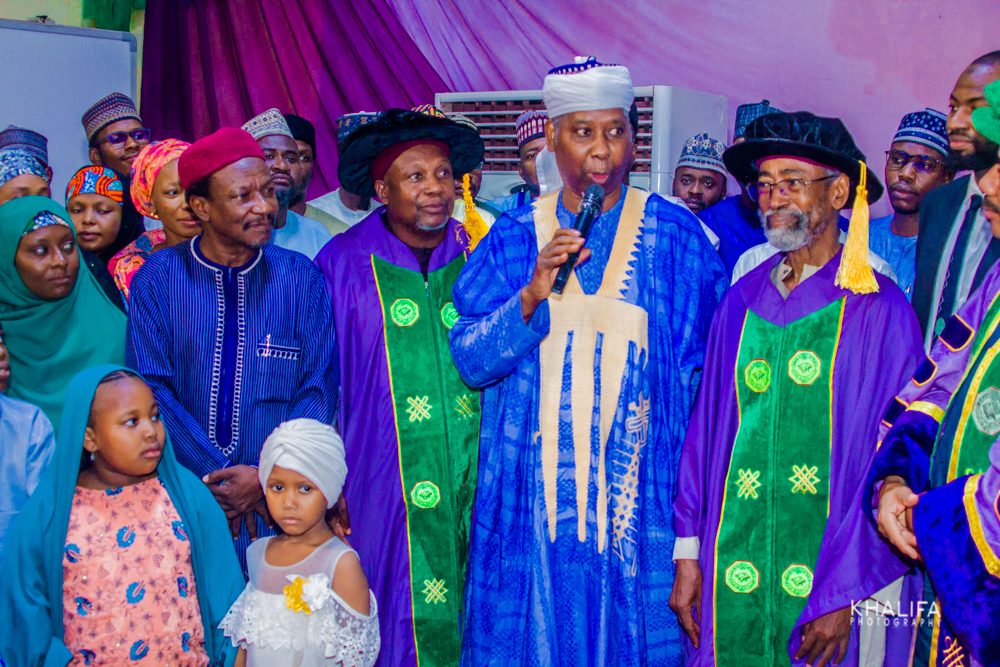
In his inaugural lecture at Usmanu Danfodiyo University, Sokoto, Professor Wali examined how ethnic, religious and regional differences in Nigeria have been not only mismanaged but deliberately instrumentalised in the contest for political power — and set out the institutional and ethical foundations on which a more cohesive national project might rest.
The argument
The lecture examined how ethnic, religious and regional differences in Nigeria have been not only mismanaged but deliberately instrumentalised in the contest for political power. It stands as a contribution to one of the most consequential live debates in Nigerian public life.
Differences are not the problem. The problem is what is done with them — and by whom, and to what end.
A voice on four continents
- International Institute of Administrative Sciences — Paris and Quebec
- United Nations Department of Economic and Social Affairs — New York
- 2nd Biennial Pan-African Conference of Ministers of Civil Service — Rabat
- 32nd Session of the Conference of African Ministers of Social, Economic Development and Planning — Addis Ababa
- Argentine Council on International Relations — Buenos Aires
- Africa–Berlin International Conference — Humboldt University, Berlin
- Islamic University of Madinah — Madinah
- Public Service Institute of Nigeria — Abuja
- CAFRAD — Tangier
- The Charter for Public Service in Africa
- Electoral reform and democratic consolidation in Nigeria
- Public administration reform across Africa
- The democratisation and investment climate in sub-Saharan Africa
- The New Partnership for Africa’s Development (NEPAD)
- Islamic education and the challenge of educational dualism in Nigeria
- Ethics, integrity and professionalism in government
Scholarship in service of the profession
He served as Chief Editor of the African Administrative Studies Journal, published by CAFRAD, and was featured in the 16th edition of Marquis Who’s Who in the World.
He also served as Coordinator of the West African Symposium on the Encyclopedia of Hajj: Pilgrimage and Pilgrims from West Africa to Makkah, held in Dakar, Senegal and sponsored by the King Abdulaziz Foundation for Research and Archives (Darah), Riyadh.
Published works